Of all the small rituals Ayurveda offers the end of the day, foot massage, known as Padabhyanga, is the one most often kept for life. The feet carry the entire day; giving them ten deliberate minutes of warmth before bed is a quiet, effective way to close it. In classical the preparation of choice for this ritual is often a Kuzhambu, the semi-solid cousin of the classical Thailam. Its dense texture stays on the soles rather than soaking into the sheets, which makes it particularly well suited to the hour before sleep. This guide walks through the full ritual, including the Kansa vatki bowl that traditionally completes it.
Why a Kuzhambu, and why the feet
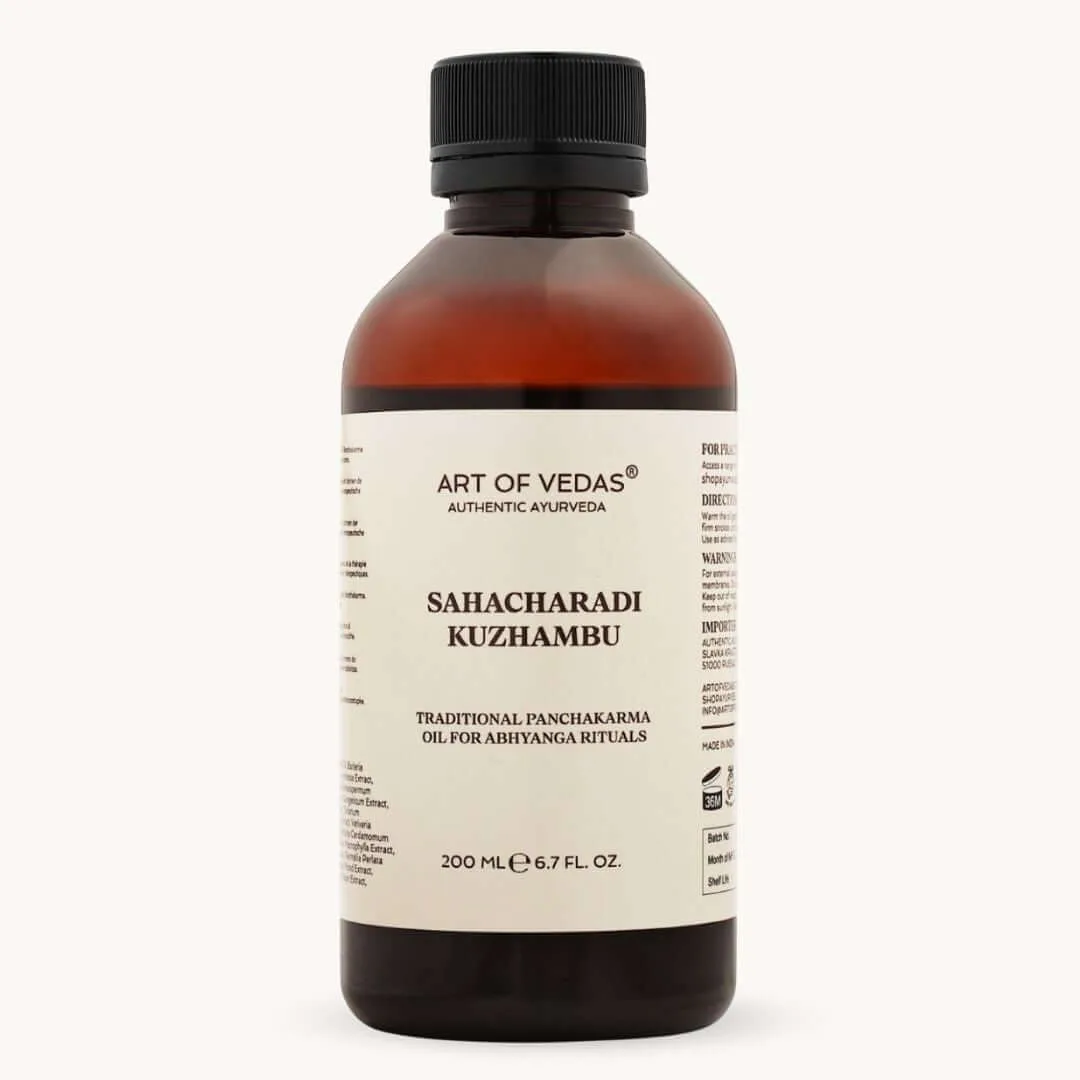
A Kuzhambu is prepared on a three-fat base, classically sesame, coconut and castor, cooked with herbal decoctions and pastes until it sets semi-solid. It is not an oil: warmed slightly, it softens and spreads, then remains on the applied area and absorbs slowly. On the feet this is a practical advantage. The soles are dense skin that welcomes a rich preparation, and the slow absorption means the botanicals stay in contact through the whole ritual. A lower-body formula such as Sahacharadi Kuzhambu is the traditional choice here; its application ritual for the legs is described in our Sahacharadi Kuzhambu application guide.
What the evening ritual is valued for
Ayurvedic households have kept Padabhyanga in the evening routine for generations because it is:
- A traditional way to settle Vata at the end of an overstimulated day
- A moment of warmth and stillness that marks the transition towards rest
- Focused care for feet that have stood, walked and carried weight since morning
- A simple ritual of self-attention that requires ten minutes and no assistance
- Nourishing care for the often neglected skin of the soles and heels
The ritual, step by step
Begin about half an hour before bed. Wash the feet in comfortably warm water and dry them well, especially between the toes. Warm the closed jar of Kuzhambu in a bowl of hot water for a few minutes until the preparation softens.
Sit comfortably and take about half a teaspoon for each foot. Work it over the sole with slow, firm thumb strokes from heel to toes, circle the heel, then give each toe a gentle press. Continue over the top of the foot and around the ankle with lighter strokes. Let the whole sequence take at least five minutes per foot; the point is the pace, not the coverage.
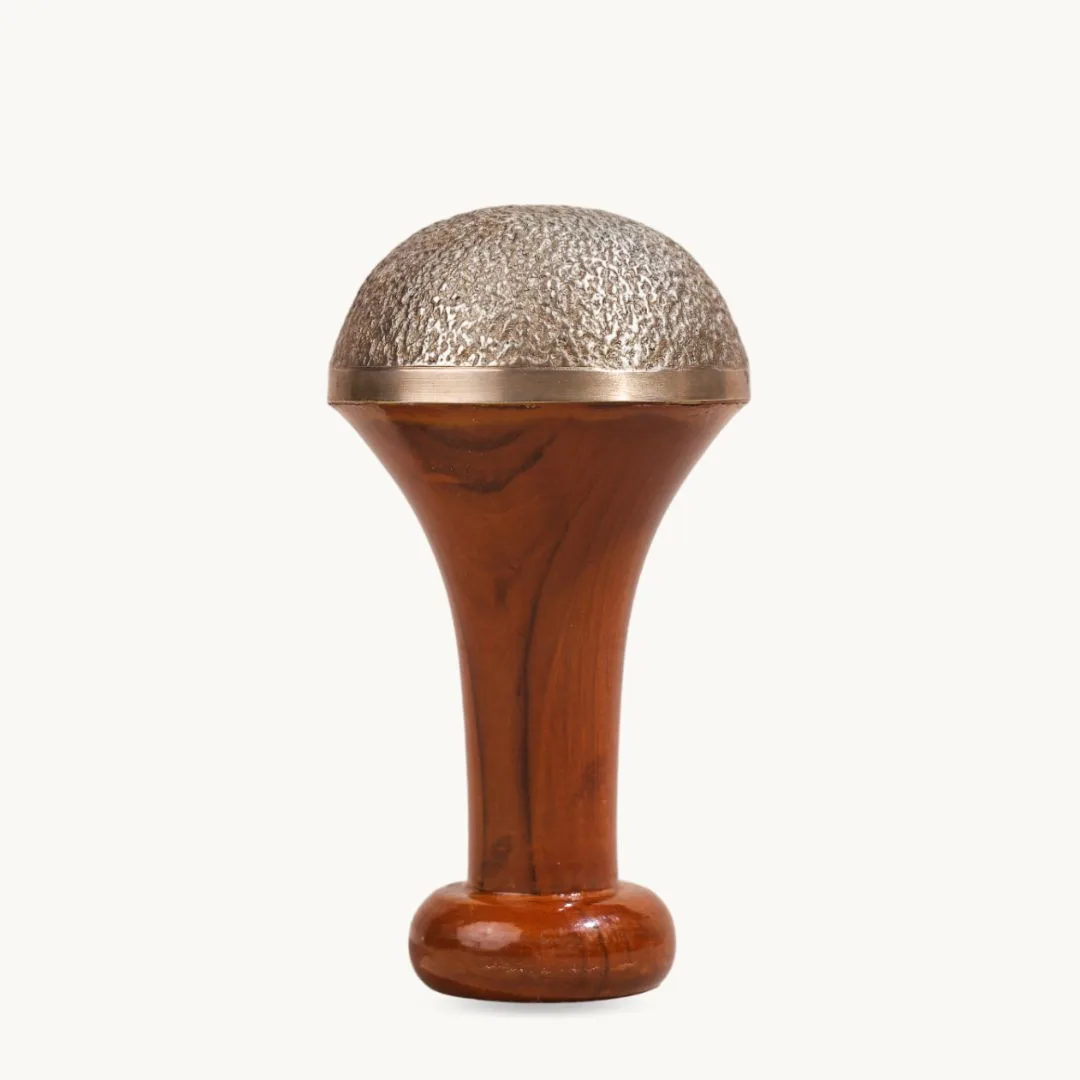
Now the bowl. Working the soles with a Kansa vatki, the traditional bronze massage bowl, is the classical refinement of this ritual. Glide the smooth base of the bowl over the sole in slow circles and long lines for two or three minutes per foot. The full technique is described in our Kansa vatki foot massage ritual. Afterwards, put on an old pair of cotton socks to protect the bedding, or wipe the feet with a warm, damp towel if you prefer them bare.
Composition and companions
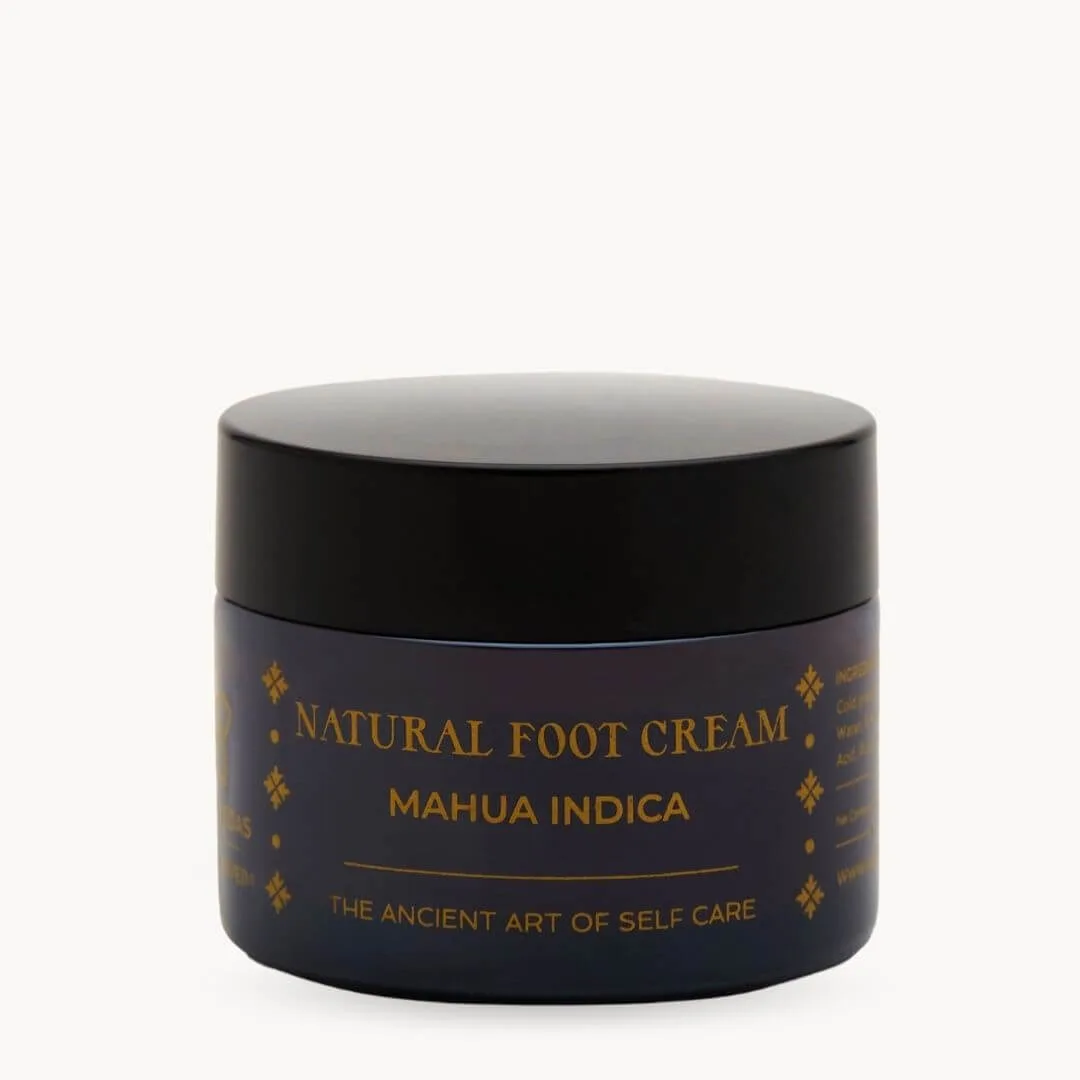
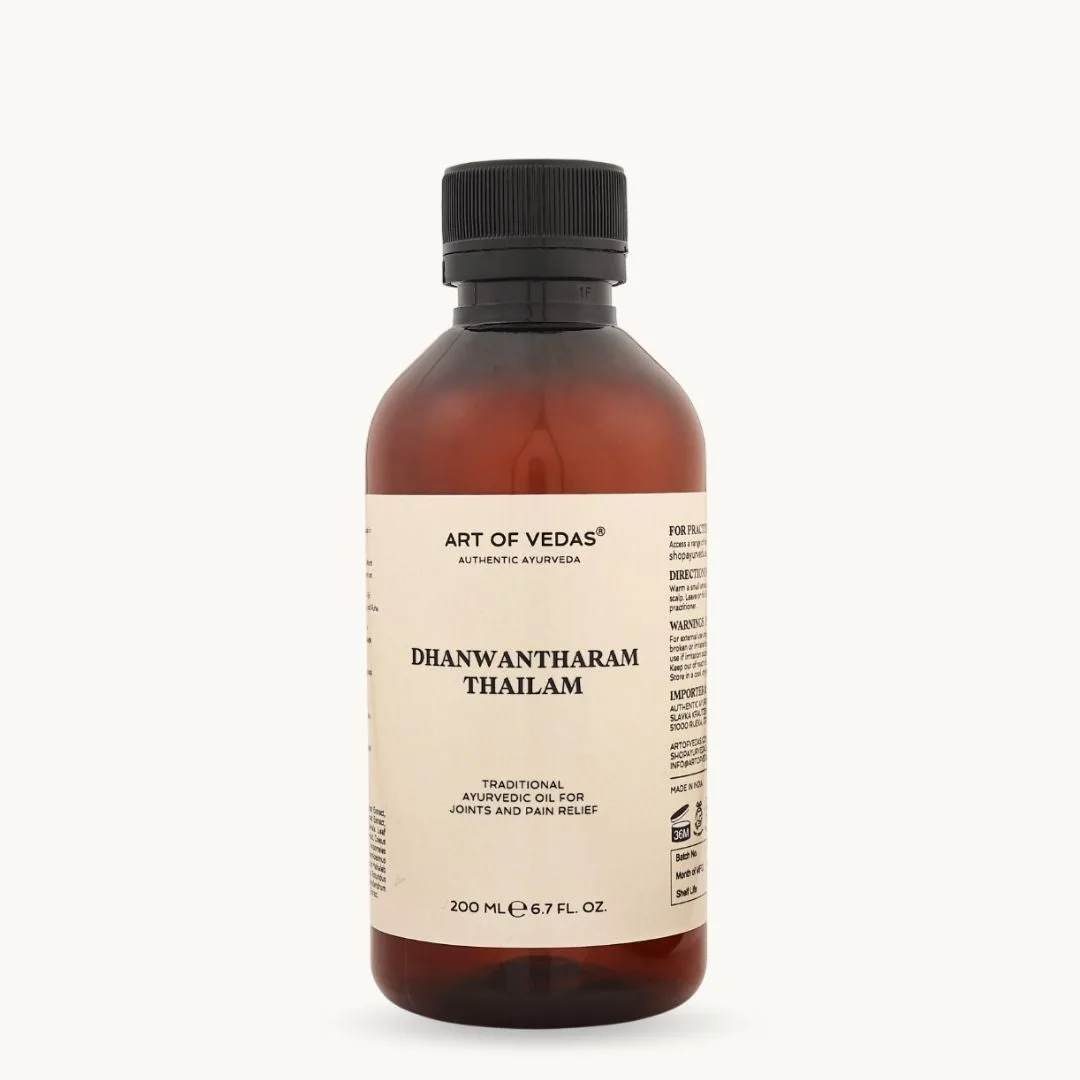
Sahacharadi Kuzhambu is built around Sahachara, a botanical long associated in classical with care of the legs and lower body, prepared as decoction and paste and cooked into the three-fat base over a slow fire. The finished preparation is soft, dense and warming in feel. On nights when you want something lighter, a few drops of a classical oil on the crown and soles serves a similar purpose; our Ksheerabala application guide covers that gentler alternative. For mornings, a botanical foot cream such as the natural foot cream with Mahua keeps the same care in a faster format.
Frequently Asked Questions
How long should the Kuzhambu stay on the feet?
Ideally twenty to thirty minutes, or simply overnight under cotton socks. The preparation absorbs slowly, so give it time rather than wiping it away at once.
Do I have to use the Kansa vatki bowl?
No, hands alone make a complete ritual. The bowl is the traditional refinement: many people find the cool bronze against the warm preparation especially settling.
Can I do this every night?
Yes. Padabhyanga is a daily ritual in many households. If every night is too much, three evenings a week still establishes the rhythm.
Should the feet be washed first?
Yes, warm water and thorough drying prepare the skin and make the massage more pleasant. The ritual traditionally begins with clean feet.
Will the preparation stain bedding?
The rich base can mark fabric, so wear old cotton socks to bed or wipe the feet with a warm towel before lying down.
Is this ritual suitable in summer?
Yes. Use a slightly smaller quantity and a shorter session if the weather is warm; the slow strokes matter more than the amount applied.
This article describes traditional Ayurvedic practice for general information and personal care. It is not medical advice. If you are pregnant, have a health concern or know your skin reacts easily, please speak with a qualified professional before beginning a new routine.