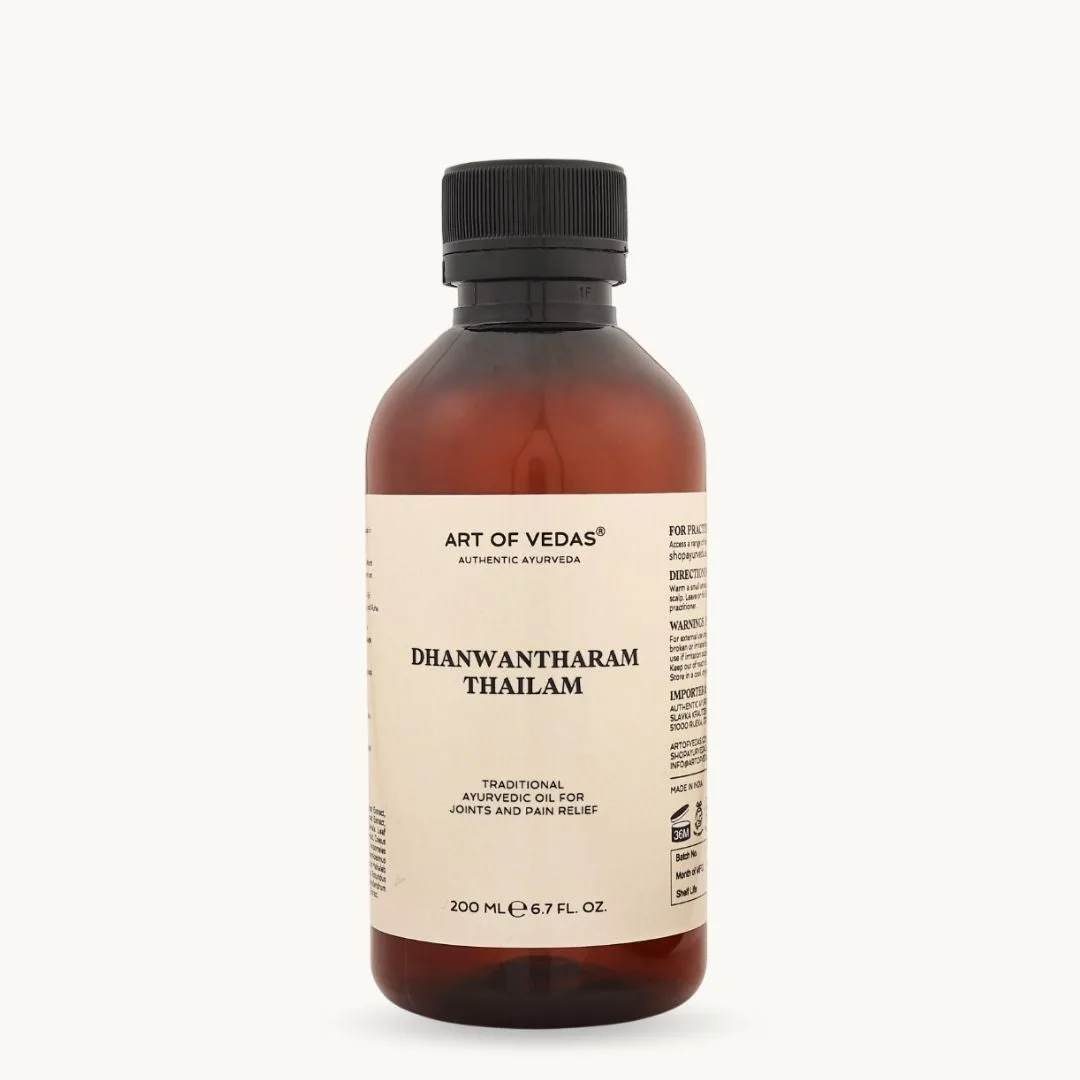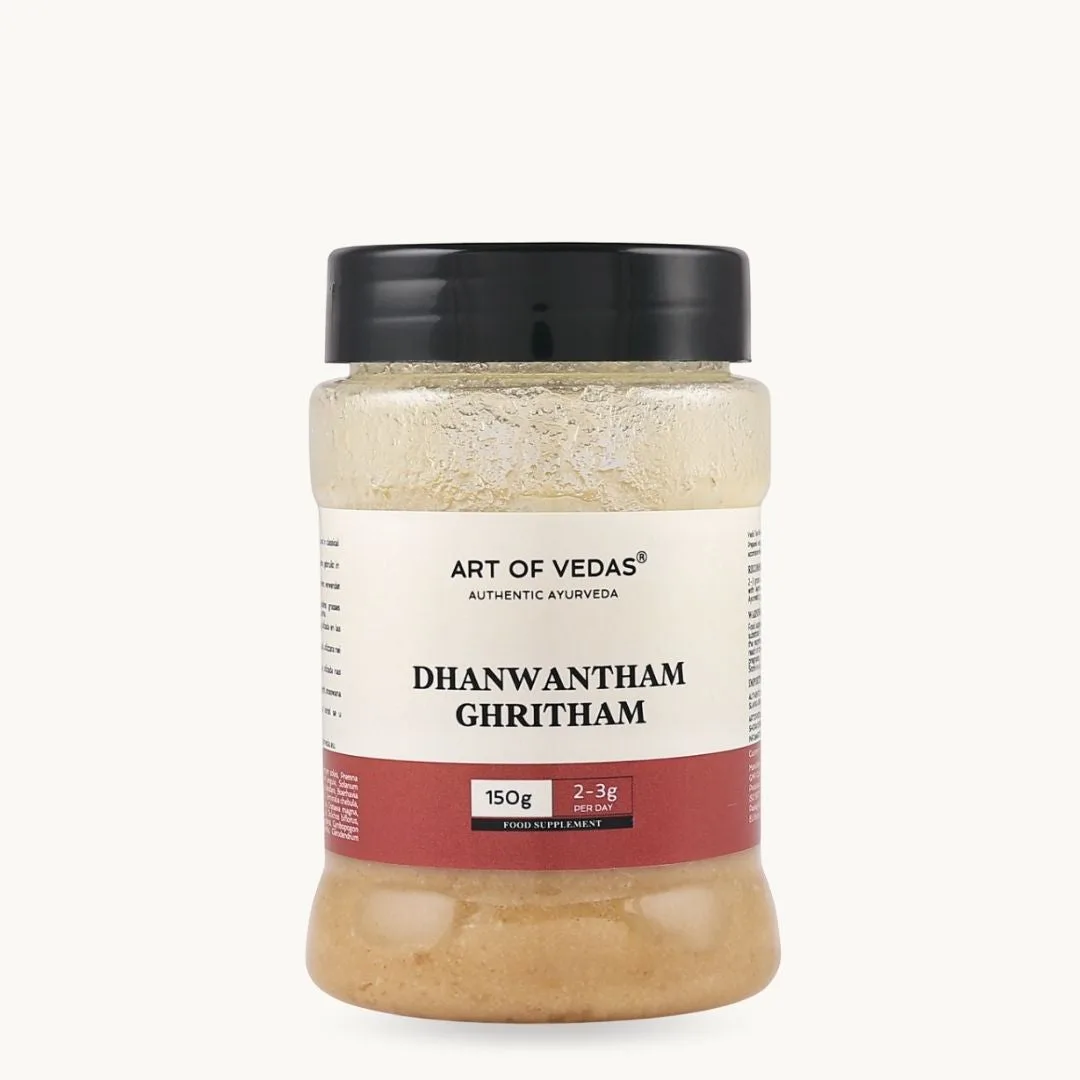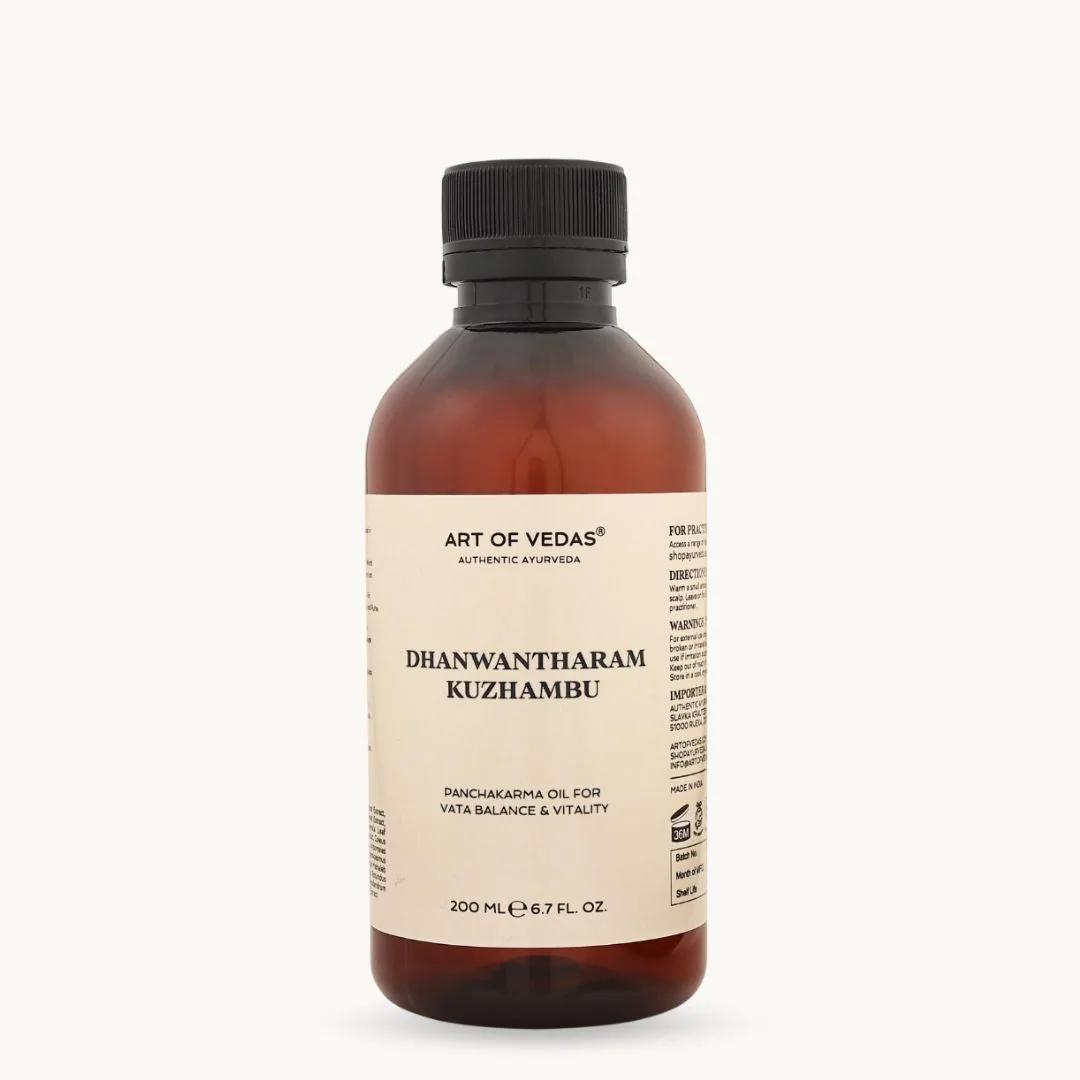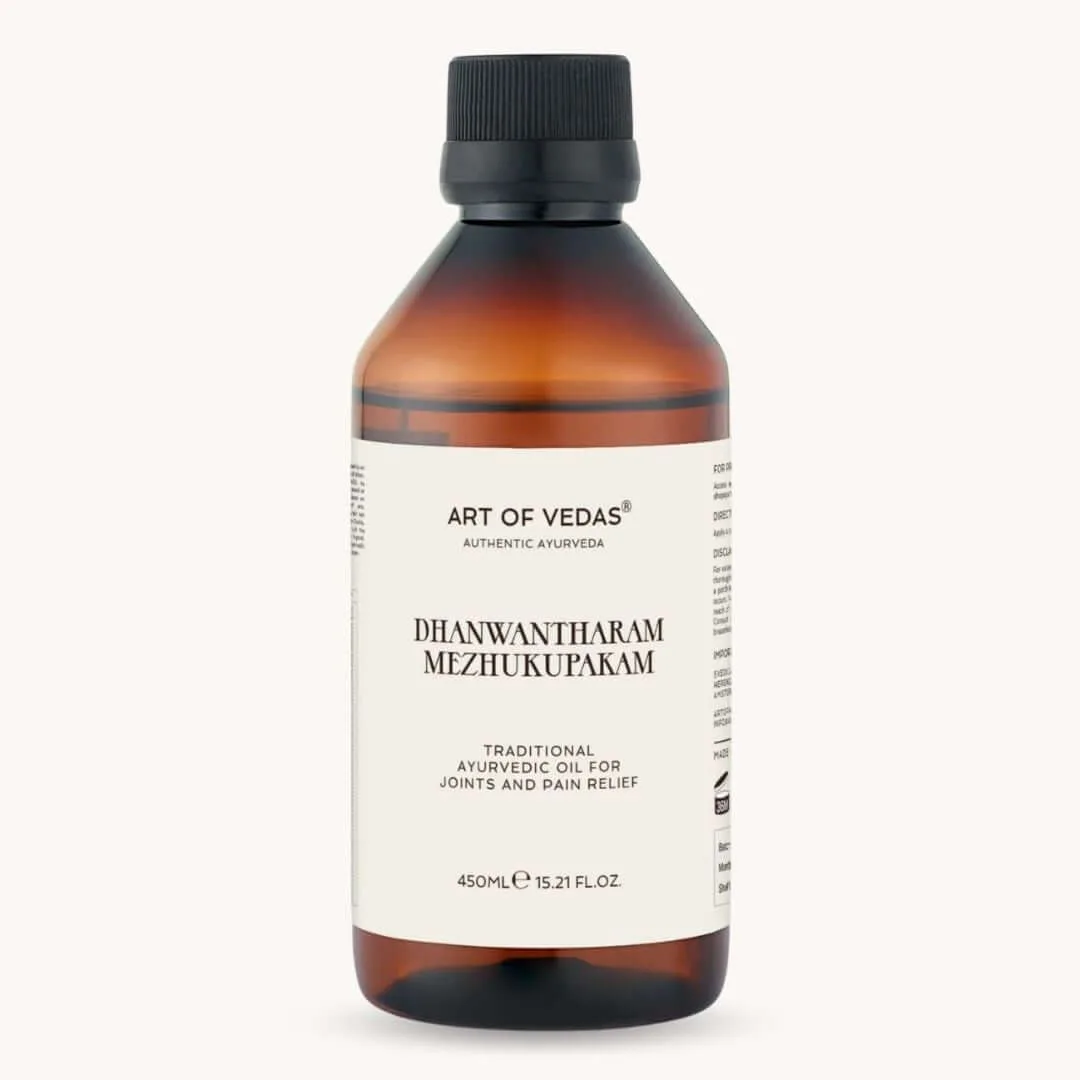
Few classical formulas appear in as many forms as Dhanwantharam. classical tradition prepares this one revered recipe as a flowing Thailam, a semi-solid Kuzhambu, a soft Mezhukupakam, an intensively processed 101 Avartana and a rich Ghritham. Each format has its own texture, its own pace and its own place in the routine. This guide maps the whole Dhanwantharam family on a single page, so that the differences become clear at a glance.
The Formula Behind Every Format
Whatever the format, the spine of the recipe remains the same. Bala, the botanical Sida cordifolia, leads the composition and is regarded in the classical compendia of classical Ayurveda as profoundly steadying. It is accompanied by the Dashamoola, the traditional group of ten roots, and a circle of companion botanicals. These are prepared through Kashayam, a slow decoction, and Kalka, a fresh paste, then worked into the base that gives each format its character. It is the final stage of preparation, not the formula itself, that separates the members of the family.
The Liquid Expressions: Thailam and 101 Avartana
Dhanwantharam Thailam is the familiar liquid form, suited to broad strokes and full-body Abhyanga, and described at length in our complete guide to Dhanwantharam Thailam. Dhanwantharam 101 Avartana is also liquid, yet it stands apart: the preparation cycle is repeated again and again, each round called an Avartana, until the oil reaches a prized concentration. It is used sparingly and thoughtfully, as our guide to the 101 Avartana tradition explains.
The Semi-Solid Expressions: Kuzhambu and Mezhukupakam
Dhanwantharam Kuzhambu is semi-solid, and it is important to say plainly that it is not an oil. It holds its form, stays on the area where it is applied and absorbs slowly, which is why tradition reserves it for targeted, local application rather than full-body work. Dhanwantharam Mezhukupakam goes one step further along the same path: a soft, balm-like consistency, the densest of the topical formats, explained in our short piece on what Mezhukupakam means.
Ghritham and Choosing Between the Formats
Dhanwantharam Ghritham completes the family. It is the classical rich preparation of the tradition, taken in small, measured quantities and best approached under the guidance of an experienced practitioner. With all five formats in view, the choice becomes a matter of purpose:
- The Thailam serves broad, flowing Abhyanga and everyday routines.
- The Kuzhambu serves targeted, slow-absorbing local application that stays in place.
- The Mezhukupakam serves those who want the richest, most concentrated topical texture.
- The 101 Avartana serves moments when tradition asks for depth in a few drops.
- The Ghritham serves the classical internal tradition, with professional guidance.
Art of Vedas keeps the complete Dhanwantharam family in one range, so that each household can assemble the combination its own routine calls for.
Frequently Asked Questions
Is the Kuzhambu simply a thicker oil?
No. A Kuzhambu is a semi-solid preparation in its own right. It does not pour, it remains on the applied area and it absorbs slowly. Tradition regards it as a distinct format with its own uses, not as a variation of the oil.
What does the number 101 mean?
It refers to the repeated preparation cycles, each called an Avartana. The formula is processed over and over, and the count of one hundred and one signals the patience and concentration of the finished preparation.
Which format suits full-body massage?
The liquid Thailam. Its flowing texture is made for broad, continuous strokes. The semi-solid members of the family, the Kuzhambu and the Mezhukupakam, are reserved for chosen areas.
What exactly is a Mezhukupakam?
It is the softest and densest topical stage of the classical preparation method, with a balm-like body. It spreads under warm palms yet remains distinctly fuller than the Kuzhambu, and it is used in the same targeted way.
Can the formats be combined in one routine?
Many households do exactly that: the Thailam for regular broad routines, and a semi-solid format for one area that deserves longer, quieter attention. There is no obligation to choose only one.
This article describes traditional Ayurvedic practice and is intended for general information only. It does not constitute medical advice, diagnosis or treatment. Please consult a qualified healthcare professional before beginning any new routine, particularly if you are pregnant, nursing or receiving medical care.