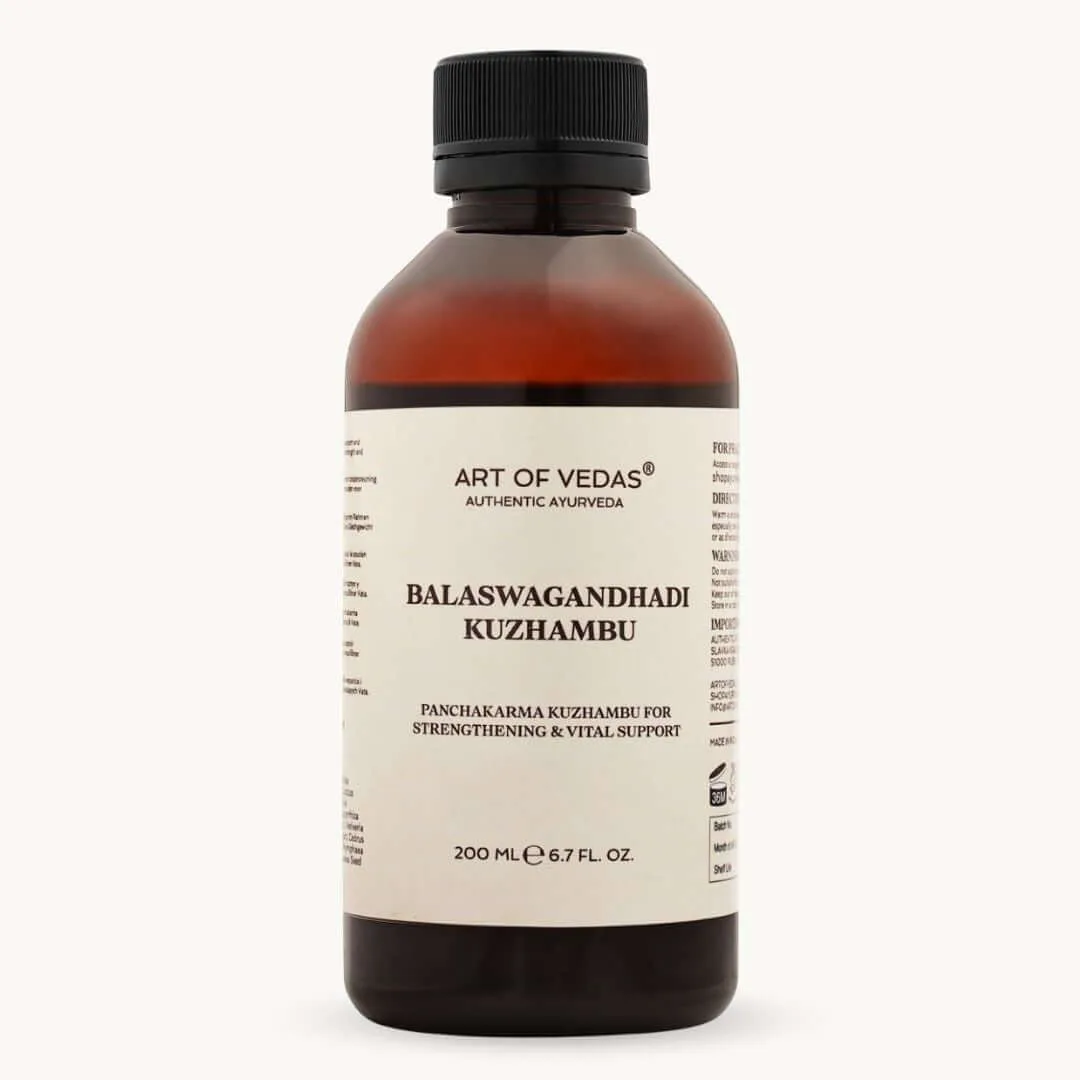
Balaaswagandhadi Kuzhambu brings together two of the most respected botanicals in the Ayurvedic strength tradition, Bala and Ashwagandha, in the semi-solid Kuzhambu format that classical practice reserves for slow, focused body work. It is not an oil, it does not behave like one, and that is the point: the preparation stays on the applied area, absorbs gradually and turns a simple massage into a longer, more deliberate ritual. This guide covers the formula, its traditional context, the character of the format and how to bring it into a modern routine.
The name and the tradition behind it
The name reads as three parts: Bala, Ashwagandha and the Sanskrit ending "adi", meaning "and the others". Bala, the botanical Sida cordifolia, appears throughout the classical literature of classical as a foundation herb for preparations intended for the physical body. Ashwagandha, Withania somnifera, carries an equally long record in the Rasayana tradition, the branch of Ayurveda concerned with nourishment and steadiness. Formulas of this family appear in the classical compendia and have been prepared in Vaidya households for generations, most familiarly as a massage oil, and in the richer Kuzhambu form for more concentrated work.
What makes the Kuzhambu format different
A Kuzhambu is prepared on a base of three fats, classically sesame, coconut and castor, cooked together with herbal decoctions and fresh pastes until the moisture has evaporated and the preparation cools to a soft, dense set. Unlike a Thailam, it does not pour. Warmed in a water bath it softens and spreads, then remains in a thin layer on the skin instead of running off. Absorption is slow by design, which suits sessions of twenty to thirty minutes on a single region. For a full comparison of the two formats within this formula family, see Balaaswagandhadi Kuzhambu vs Thailam.
Traditional place in the routine
In classical practice this preparation is associated with the demanding side of daily life: field work once, training and long working days now. The Balaaswagandhadi Kuzhambu is traditionally valued for:
- Slow, focused massage of shoulders, arms, thighs and calves after physical effort
- Post-exertion recovery rituals built on warmth, rest and unhurried touch
- Evening routines in the colder months, when richer textures are traditionally preferred
- Longer sessions where the preparation should remain in place rather than absorb at once
- A general sense of nourishment for skin and body within a strength-oriented routine
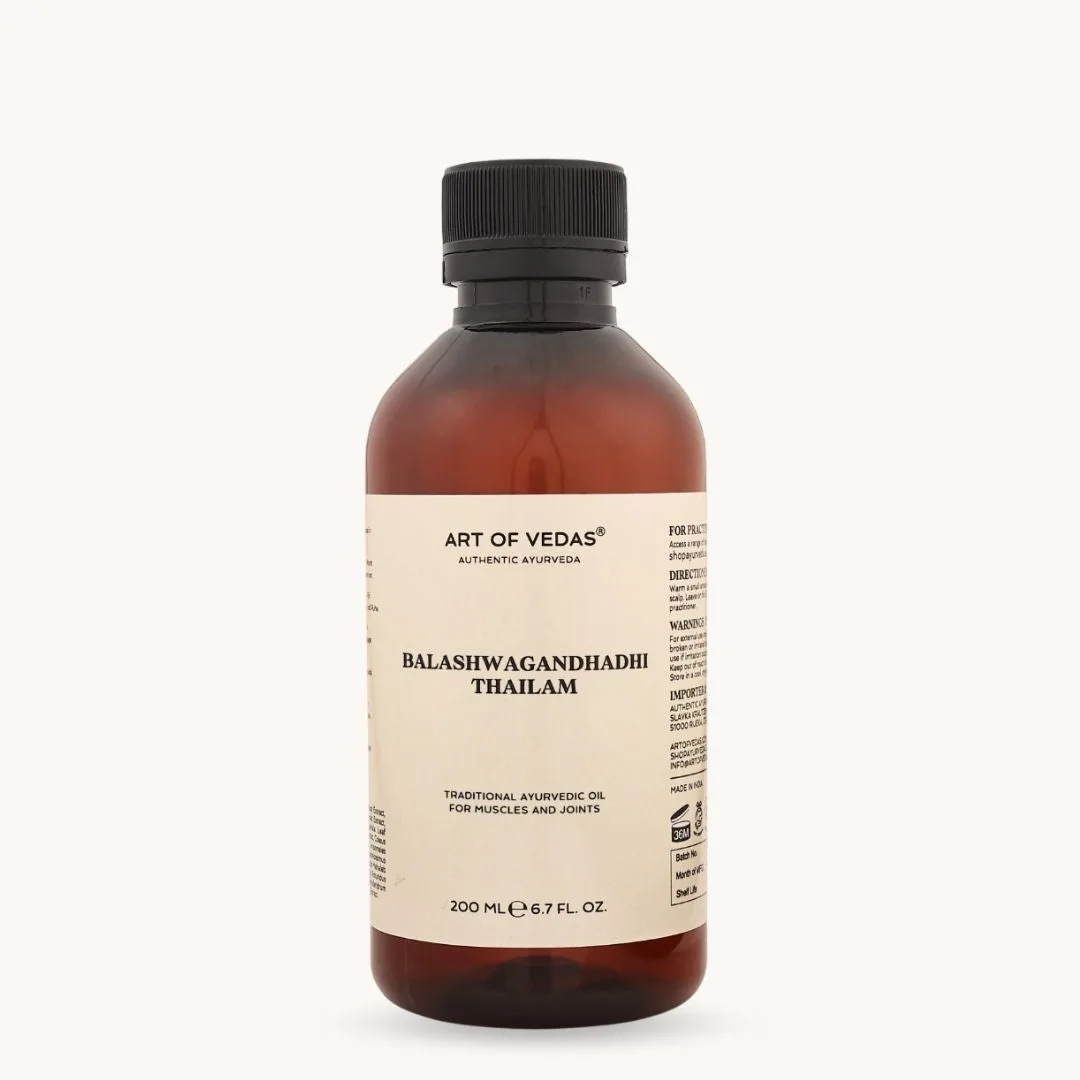
Its flowing counterpart, the Balaswagandhadi Thailam, serves the same tradition in full-body Abhyanga, and many households keep both formats side by side.
Composition, described plainly
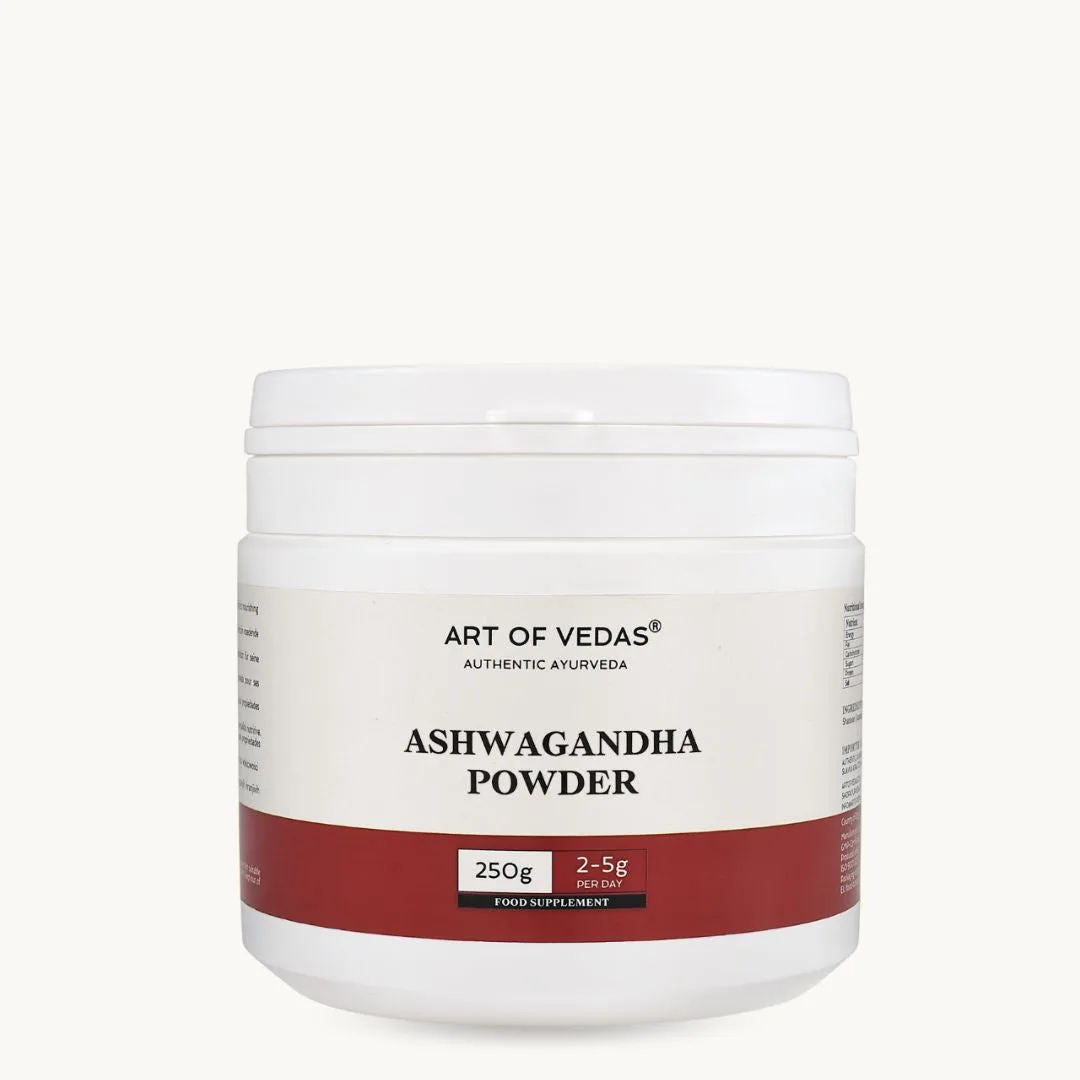
The heart of the formula is the pairing already named: Bala prepared as decoction and paste, Ashwagandha alongside it, and a supporting group of classical botanicals cooked patiently into the three-fat base. Nothing about the method is quick. The fats carry the plant material, the slow fire reduces the water content, and the final texture is the natural result of that base cooling, not of any added thickener. Those who value Ashwagandha in its own right often keep Ashwagandha powder in the kitchen as well, where the same botanical serves the internal side of the tradition.
Bringing it into a modern routine
Warm the closed jar in hot water, take a teaspoon per region, and work it in with slow, firm strokes. Leave it for twenty to thirty minutes, keep warm, then wipe and rinse. The full method, including quantities and timing, is set out in our step-by-step article on how to use Balaaswagandhadi Kuzhambu. Most people settle into two or three sessions a week, or nightly use on the legs during heavy training periods.
Frequently Asked Questions
Is Balaaswagandhadi Kuzhambu suitable for daily use?
Yes, within a normal personal care routine. Daily evening use on the legs or shoulders is common in the tradition; let comfort and time decide.
Does it work for full-body massage?
It can be used more widely, but the semi-solid texture is really made for regional work. For full-body Abhyanga the Thailam format is the practical choice.
What does it smell and feel like?
Expect a warm, herbal, slightly earthy character and a rich, cushioned feel on the skin. The preparation softens with body heat and leaves a nourished finish after rinsing.
Who typically reaches for this formula?
People with physically active routines: those who train, walk long distances or spend the day on their feet, and anyone who prefers a slower, more deliberate evening ritual.
How should I store the jar?
Keep it closed, cool and away from direct sunlight, and always scoop with dry hands or a dry spoon. The semi-solid set will vary slightly with room temperature; that is normal.
This article describes traditional Ayurvedic practice for general information and personal care. It is not medical advice. If you are pregnant, have a health concern or know your skin reacts easily, please speak with a qualified professional before beginning a new routine.