This article is educational and describes traditional Ayurvedic concepts and self-care practices. It is not medical advice and is not intended to diagnose, treat, cure or prevent disease. If you are pregnant, taking medication, managing a health condition, or unsure whether a practice is appropriate for you, speak with a qualified healthcare professional or Ayurvedic practitioner.
In brief: Abhyanga is a warm-oil self-massage practice. The home version should be gentle, unhurried and adapted to your skin, season and comfort.
What Abhyanga means
Abhyanga is commonly translated as oil massage. In Ayurvedic practice it is associated with daily routine and caring for the body through touch, warmth and attention. It is not a treatment guarantee and should never be performed over broken or irritated skin.
A careful home method
- Choose a quiet, warm room and place a non-slip mat where needed.
- Warm a small amount of oil indirectly; it should feel comfortably warm, never hot.
- Apply with long strokes on the limbs and gentle circles around joints.
- Use less oil on the scalp or face unless the product directions say otherwise.
- Leave it briefly, then bathe carefully to avoid slipping.
Choosing an oil
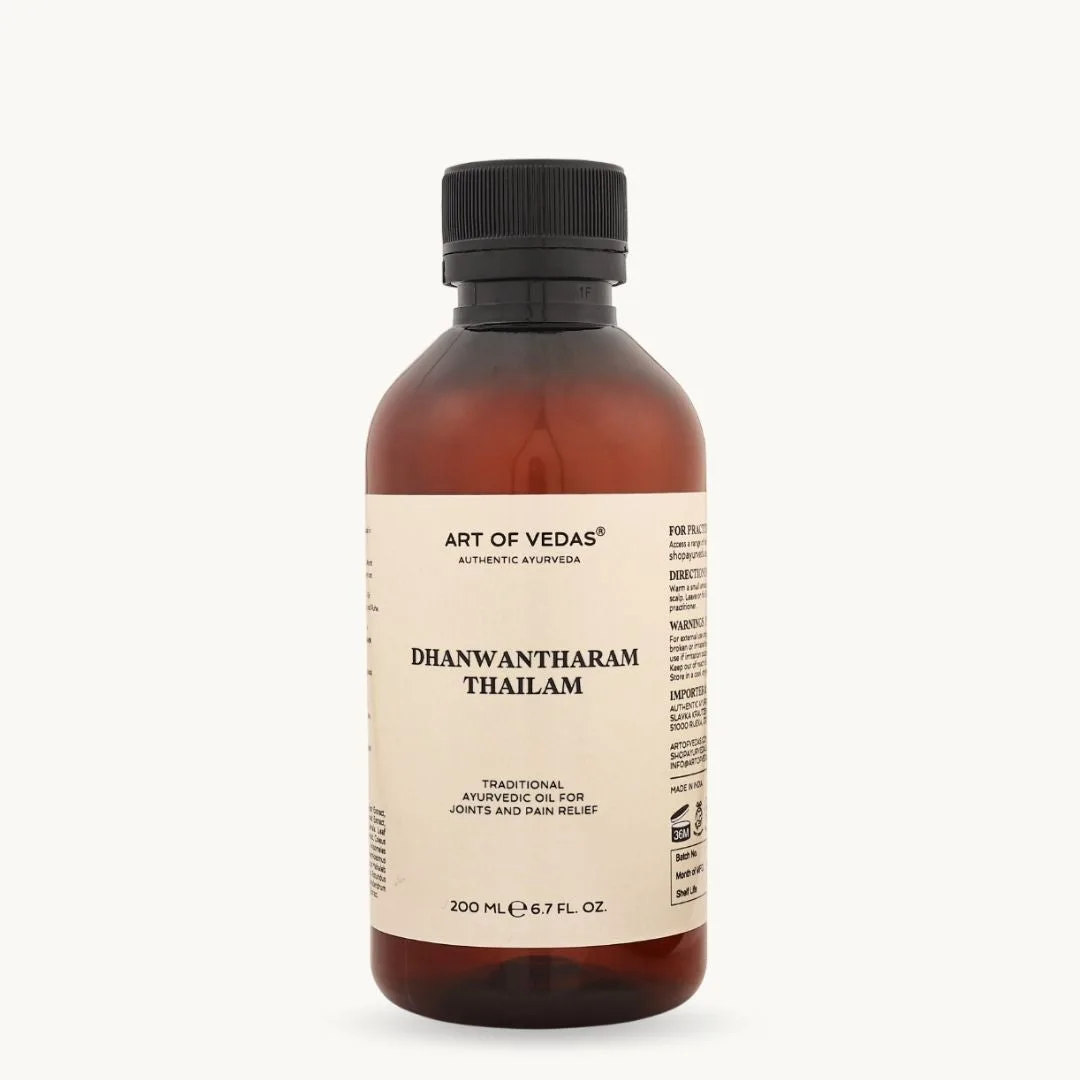
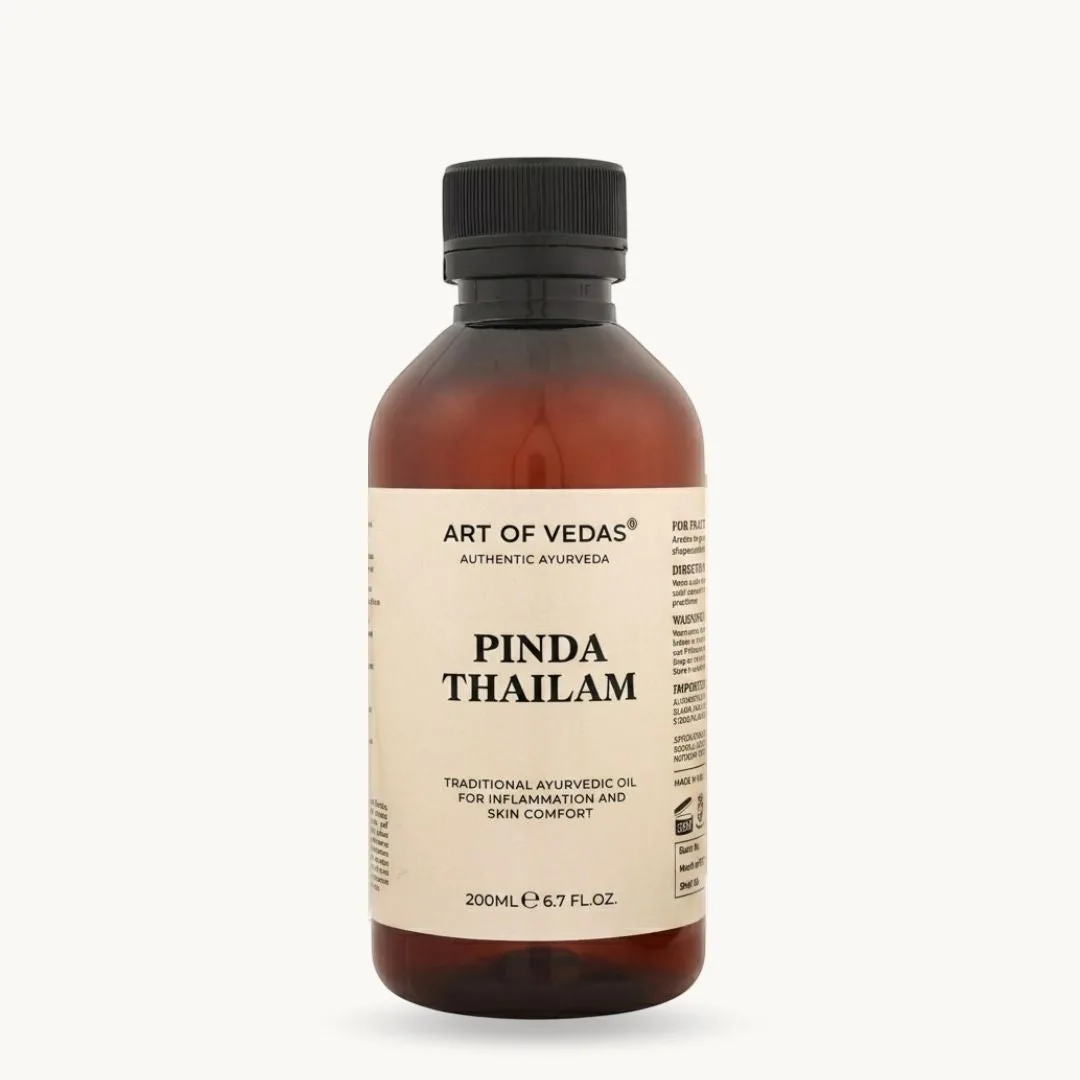
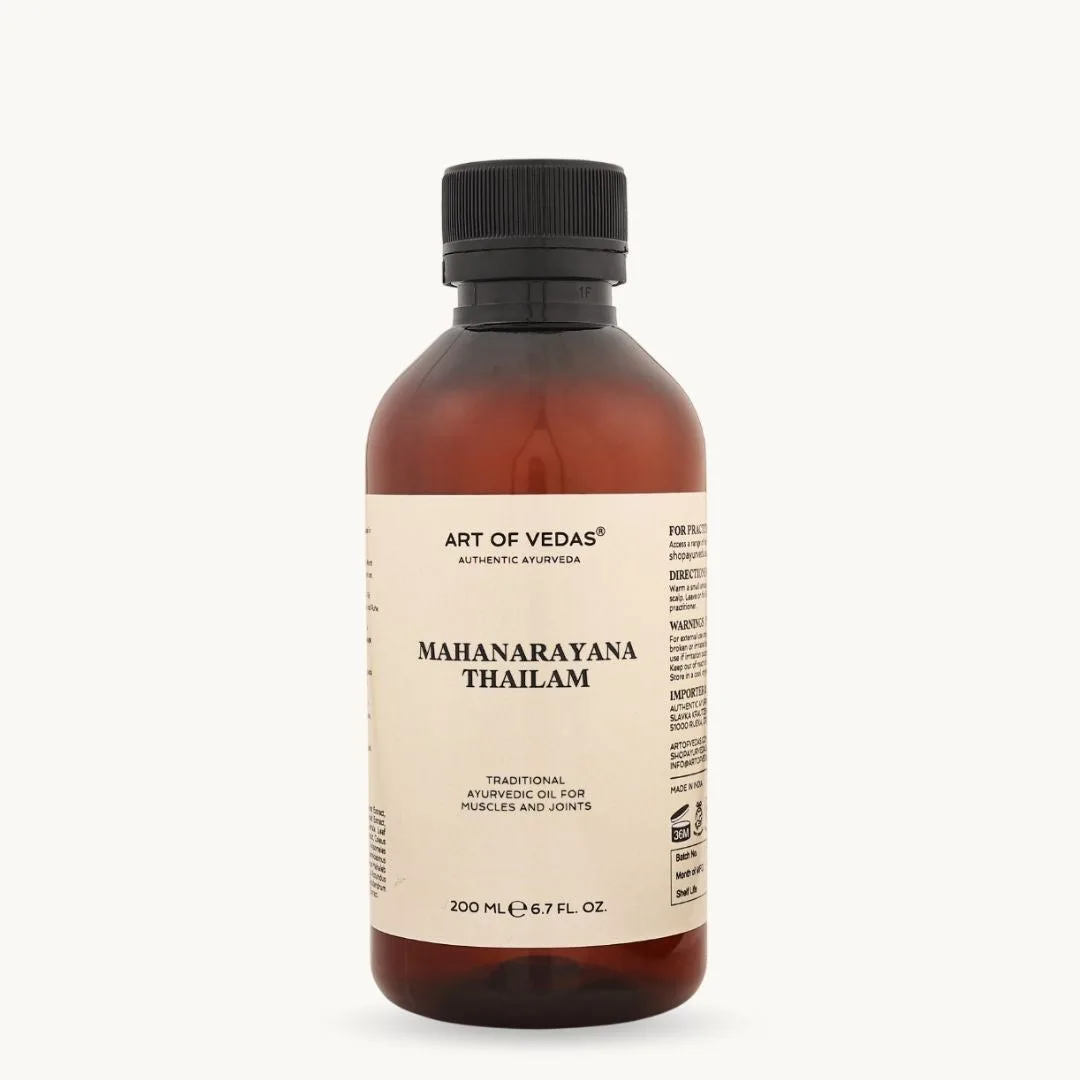
Sesame-based oils are traditionally warming; coconut-based oils are often chosen for a lighter, cooling feel. Classical Thailams have different formulas and directions. Compare them in our oil-selection guide rather than choosing from a bold claim.
When to pause
Do not massage over irritated skin, fever, acute illness, recent injury or an area that has lost sensation. Ask a qualified professional about pregnancy, children, older adults, allergies or medication.
Frequently Asked Questions
How long should Abhyanga take?
A simple home practice can take ten to twenty minutes. Consistency and comfort matter more than a fixed duration.
Should the oil be hot?
No. Warm it gently and test it on the inside of the wrist before applying.
Can I do Abhyanga every day?
Some traditions describe daily use, but frequency depends on the person, oil and season. Start occasionally and observe your skin.
What should I do after Abhyanga?
Allow a short pause, then bathe carefully. Clean the floor because oil can make surfaces slippery.